

Clinical Update: Orthopedics
BFR vs. Knee Osteoarthritis:
The Long Game
Evidence from the 2025 1-Year Follow-up RCT
The Clinical Challenge
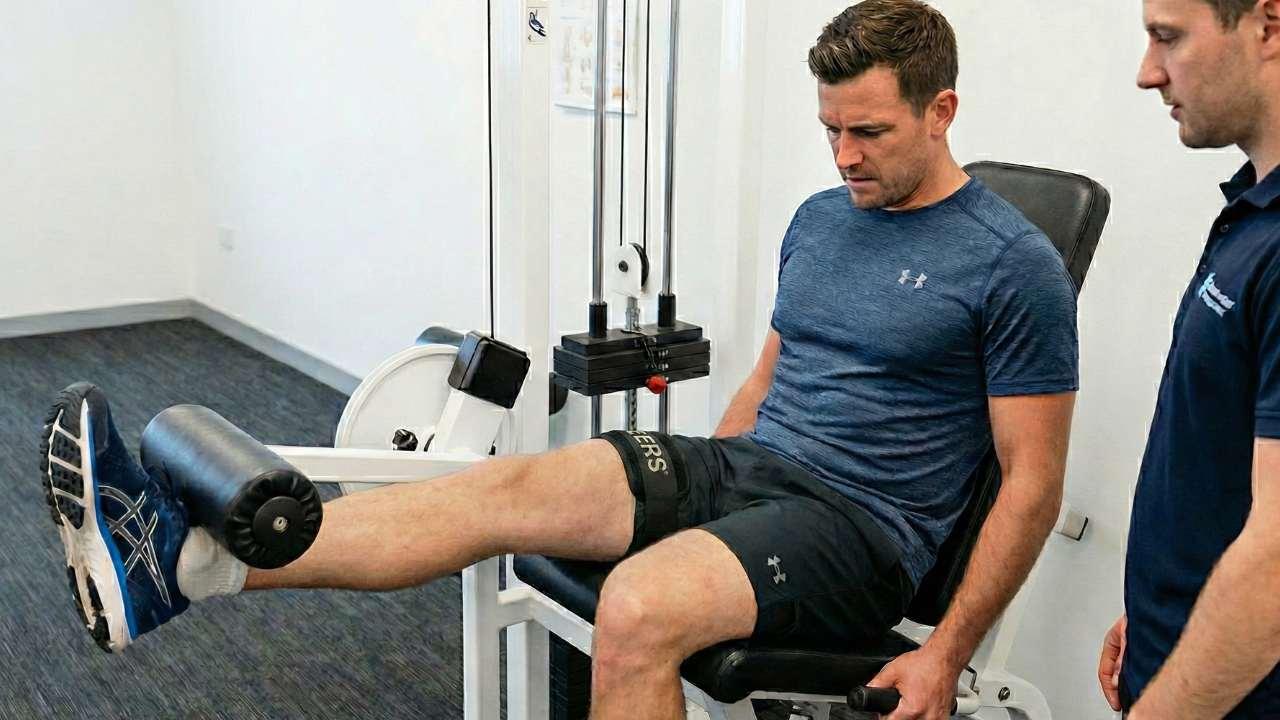
High-load resistance training is the gold standard for hypertrophy, but OA patients often can't tolerate the joint loads required (60-80% 1RM) to induce change. Does BFR offer a lasting alternative?
1-Year Post-Intervention Outcomes
Visual Analog Scale (Lower is Better)
Key Finding: BFR provided equal sustained pain relief to heavy lifting, with significantly lower joint stress during training.
KOOS Score Improvement (Higher is Better)
Key Finding: Functional gains were fully maintained 12 months after the intervention ceased.
Why It Matters for Your Clinic
Load Management
Achieve hypertrophy and strength gains using only 20-30% 1RM. Perfect for irritable knees.
Sustained Effect
The 2025 study confirms patients don't just get better temporarily; they stay better for at least a year.
Adherence
Lower perception of joint pain during exercise led to higher session completion rates compared to heavy loading.
Safety Profile
No adverse events reported in the BFR group at 1-year follow-up. Safe for general Knee OA population.
Get Certified in BFR Training
Unlock the ultimate rehab hack. Earn your CEUs online and master the Edge Mobility System BFR protocols today.
Get Certified & Earn CEUs OnlineOfficial Edge Mobility System Certification Bundle