
Low Back Pain & BFR: Is Low Load the New Heavy Hitter for Core Strength?
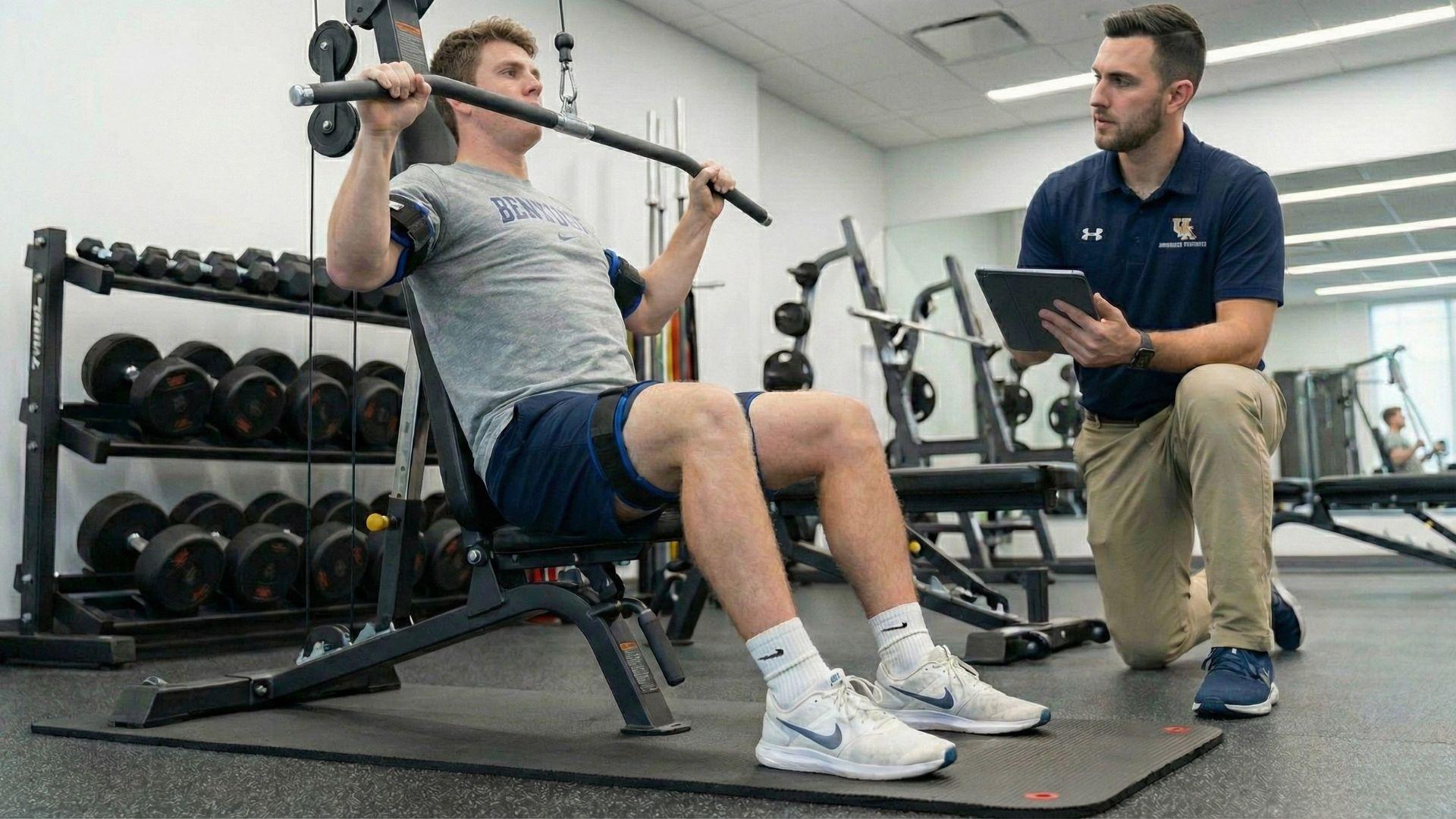
A primary challenge in rehabilitating Chronic Non-Specific Low Back Pain (CNLBP) is the "loading paradox": patients require high-intensity stimulus for core adaptation, yet high mechanical loads (70%+ 1RM) often exacerbate symptoms. ⚖️
The 2024 study by Zhang et al. published in Frontiers in Public Health offers a compelling solution. Researchers compared traditional heavy loading against Low-Load Blood Flow Restriction (LL-BFR) at 30% 1RM in an athletic population. The findings demonstrate that LL-BFR achieves comparable gains in core endurance and peak torque while significantly improving Oswestry Disability Index (ODI) and VAS pain scores compared to baseline. 📉
By prioritizing metabolic stress over mechanical tension, clinicians can drive strength gains while maintaining a higher threshold for patient comfort and compliance. 🧪

Clinical Research Insights
Can Low-Load BFR Fix Chronic Low Back Pain?
Evidence-based core strength & pain modulation strategies for athletes.
The Clinical Dilemma
"Traditional heavy loading (70%+ 1RM) is the gold standard for strength, but it often triggers pain in CNLBP patients. We need a metabolic workaround."
HL-RT
Heavy Load Resistance
LL-BFRT
Low-Load BFR Training
Standardized Protocol
Study Results
Strength Parity
Both groups showed significant and comparable increases in core muscle isometric endurance.
Pain Relief
The BFR group experienced a major reduction in VAS (Pain) and ODI (Disability) scores.
Clinical Takeaway
For athletes with low back pain, Low-Load BFR provides the physiological stimulus needed for core strengthening without the mechanical stress of traditional heavy lifting.
Learn my full Eval, Reset, and Stabilize system and how to easily assess and treat most conditions from head to toe!