Neuroplasticity in Chronic Ankle Instability: Shifting the Rehab Paradigm
Traditional rehabilitation for Chronic Ankle Instability (CAI) often overemphasizes mechanical "hardware" fixes—strengthening evertors and stretching the gastroc—while neglecting the "software" driving the movement. Modern research, specifically the systematic review by Grooms et al. (2024), highlights that CAI is fundamentally a neurocognitive deficit. The brain undergoes significant neural reorganization, remapping how it processes proprioception and executes motor control.
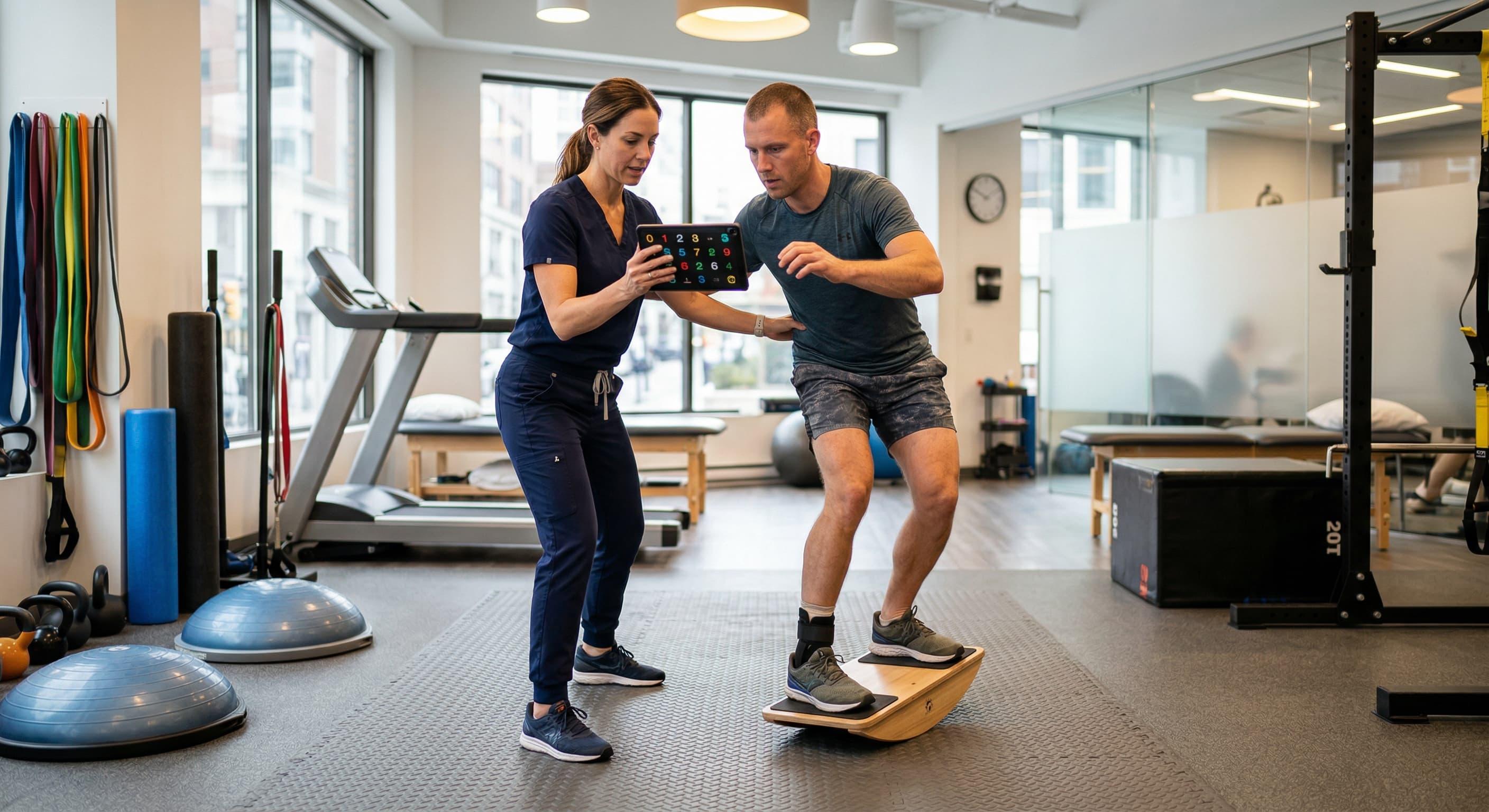
To achieve superior functional outcomes, clinicians must integrate neurocognitive loading into dynamic stabilization. This involves transitioning from pre-planned drills to reactive challenges. By implementing visual distractions and dual-tasking—such as cognitive arithmetic during balance tasks—therapists can force the motor cortex to adapt under pressure. This evidence-based approach addresses the cortical excitability changes necessary for true joint stability and long-term patient recovery.

Stop Treating Just the Ankle.
Treat the Brain Behind the Instability.
The "Hardware" vs. "Software" Issue
Chronic Ankle Instability (CAI) isn't just about loose ligaments. Research shows significant neural reorganization. Your patient's brain has literally remapped how it processes ankle proprioception.
The Systematic Review (Grooms et al. 2024)
Functional Outcomes
Neurocognitive training significantly improved Patient Reported Outcomes (PROs) and balance performance compared to traditional rehab alone.
Neural Outcomes
Meta-analysis suggests that adding cognitive load changes the way the motor cortex controls joint stability.
How to Update Your Rehab Today:
Want more evidence-based clinical pearls?
Stop guessing. Start getting better outcomes with the Modern Manual Therapy system.
EARN CEUs & GET UNLIMITED ACCESS →Join Dr. E's Flagship Course Online
Learn my Eval, Reset, and Stabilize System
Get Rapid Results from the Cervical Spine to the Foot/Ankle and everything in between!