Rethinking the Spondylolysis Protocol: Why Immediate Loading Wins Over Prolonged Rest
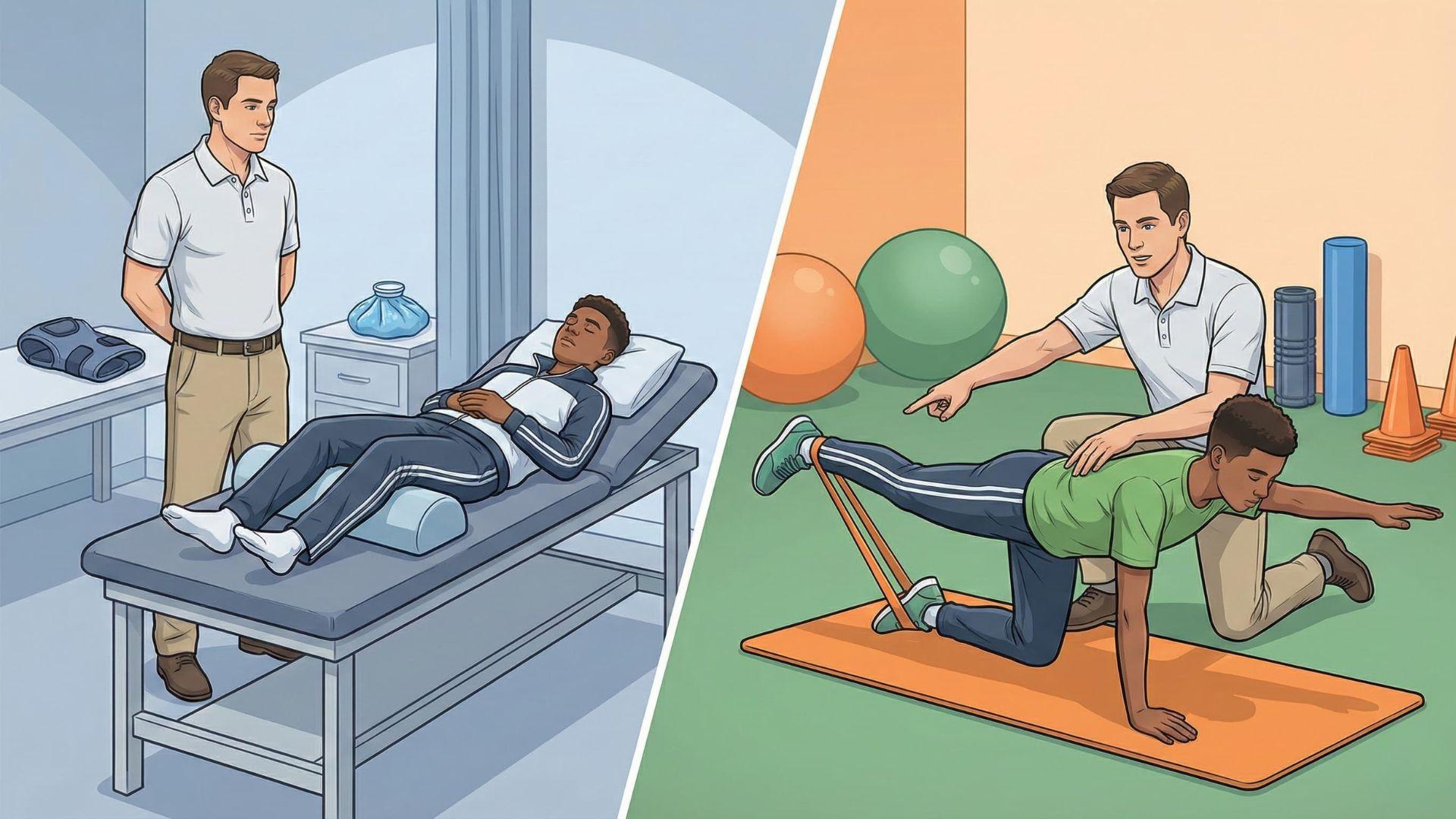
Traditional wisdom for adolescent spondylolysis often defaults to "rest and wait." However, recent evidence from a 2026 BJSM multicenter randomized trial challenges this passive approach. The data reveals that an Immediate Functional Progression Program (IFPP) initiated within seven days of diagnosis outperforms prolonged rest across every clinical metric.
Athletes in the immediate PT group returned to sport 38 days sooner, experienced a 9.6x lower risk of recurrence, and showed significant muscle preservation in the multifidus. Crucially, early loading did not compromise bony healing or increase fracture risk. For rehab professionals, the message is clear: passive rest is a disservice to the adolescent athlete. Active, early intervention is the key to superior outcomes and psychological resilience.

Immediate PT for Spondylolysis:
Rethinking the "Rest Only" Protocol
Evidence-based findings from the BJSM (2026) Multicentre Randomised Trial on adolescent athletes.
Return to Sport
38 DaysSooner with Immediate PT
12-Mo Recurrence
3%vs 29% in rest-only group
Pain & Disability
-21.3Points on Micheli Scale at 1mo
Exceeds MCID (p < 0.001)Study Methodology
Population
64 adolescent athletes (median age 14.2) with MRI-verified active lumbar spondylolysis.
Intervention Group
Immediate Functional Progression Program (IFPP) initiated within 7 days of diagnosis.
Control Group
Prolonged rest until symptoms resolved (median delay of 28 days) before starting PT.
Clinical Implications
- 1 No Adverse Effects: Early loading did not compromise bony healing or increase fracture risk.
- 2 Muscle Preservation: Immediate PT showed a 7% increase in multifidus CSA vs a 1.4% decrease in the rest group.
- 3 Psychosocial Benefits: Quicker RTS significantly reduces the psychological impact of sports exclusion.
Master the Advanced Rehabilitation of Spondylolysis
Get the full protocol used in the latest clinical trials and improve your outcomes.
Earn CEUs and Get Unlimited Access to Dr E’s Flagship Course OnlineLearn my Eval, Reset, and Stabilize System
Get Rapid Results from the Cervical Spine to the Foot/Ankle and everything in between!