Knee OA Infographic - Dr. E
Dr. E Logo

Programmed Walking vs. Strengthening

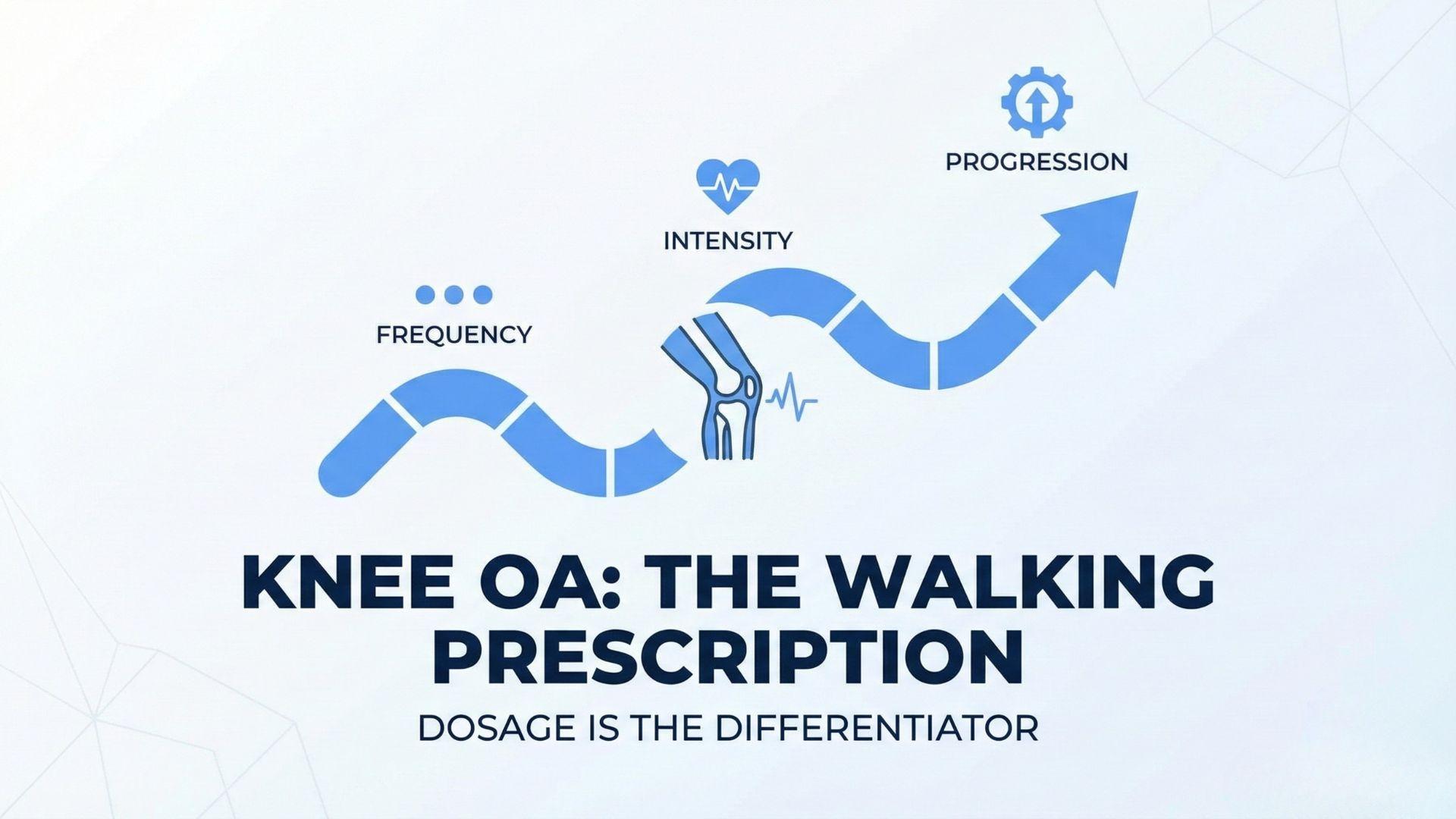
Why "dosing" is the differentiator in Knee OA outcomes.

The "Prescription" Factor

Clinicians often assume aerobic exercise is "unstructured" cardio. In Roddy et al. (2005), walking was treated with the same rigorous programming as a heavy resistance session.

Key Clinical Insight

"The walking wasn't just incidental; it was systematically progressed—matching the frequency and duration of traditional strength work."

How the Walking Was Programmed

Frequency

3x Weekly

Regular stimulus

Duration

30–60 Min

Time under tension

Intensity

"Brisk"

50-70% HR Reserve

Progression

Systematic

Increasing pace/load

Effect Size Comparison (Pain Relief)

Structured Walking Formal program adherence
0.52
Quad Strengthening Home-based resistance
0.39

Conclusion: Modality is Secondary to Dosage

When programmed like strength training, walking achieves superior clinical results.

Prescribe, Don't Suggest

The high effect size (0.52) was dependent on a specific prescribed frequency and pace.

Systemic Loading

Programmed walking loads the joint while providing cardiovascular and metabolic benefits.

Linear Progression

Walking intensity must increase over time to continue driving knee OA improvements.

Ready to Level Up Your Patient Outcomes?

Take the Full Online Seminar

Master Modern Manual Therapy & clinical exercise programming.

Reference

Roddy, E., Zhang, W., & Doherty, M. (2005). Aerobic walking or strengthening exercise for osteoarthritis of the knee? A systematic review. Annals of the Rheumatic Diseases, 64(4), 544–548.

Share This Research

© 2024 Edge Mobility System. All Rights Reserved.

Seminario en línea sobre terapia manual moderna: el enfoque ecléctico para la evaluación y el tratamiento de la calidad de la audición y la calidad de la voz

5.0
$ 399.99
$ 199.99
$ 200.00